
Community
Odidi Oil Spill: Gbemre Accuses Community Leaders of Complicity, Demands End to Illegal Bunkering
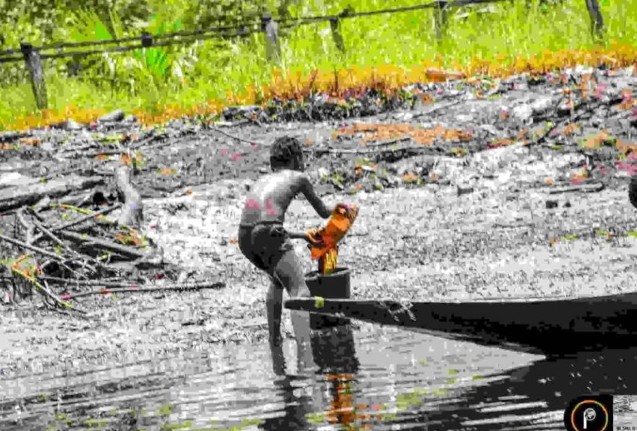
A Niger Delta environmental activist, Mr. Zik Gbemre, has accused some community leaders and influential local actors of allegedly enabling illegal oil bunkering operations linked to recurring oil spills in the Odidi axis of Warri South-West Local Government Area of Delta State.
Gbemre, Coordinator of the Niger Delta Peace Coalition (NDPC), argued that the persistent pollution affecting Odidi and neighbouring communities cannot be effectively addressed without tackling the alleged illegal tapping of pipelines, crude oil theft and the complicity of individuals who facilitate such activities.
His position comes amid reports of extensive environmental damage from oil spills in the area, with fishing communities facing serious threats to their livelihoods, waterways, mangrove ecosystems and farmlands.
Speaking in an online conversation with The Southern Examiner on Saturday, Gbemre described the Odidi corridor, which falls within the oil-producing region, as a longstanding centre of illegal bunkering activities.
He alleged that the area had experienced illegal bunkering for more than 25 years, insisting that the recurring spills should not be examined solely from the perspective of oil companies' operational responsibilities without investigating the circumstances surrounding pipeline breaches.
According to him, repeated illegal tapping of pipelines weakens their structural integrity, increasing the likelihood of further leaks even after damaged sections have been repaired.
Fresh Oil Spills Raise Environmental Concerns
The latest reported incidents have renewed concerns over the environmental safety of communities along the Trans-Forcados Pipeline and associated oil infrastructure.
The first of the reported 2026 incidents was observed on February 20 along the Trans-Forcados Pipeline, under the operational responsibility of Heritage Energy Operational Services Limited (HEOSL), according to the account published by The Southern Examiner.
Another spill was reportedly observed on May 1 around the Kremor Manifold loading trunk, with the publication identifying the facility as part of the pipeline infrastructure allegedly managed by the company.
The incidents reportedly affected Odidi and several adjoining communities, including Kunukunuma, Seitorububor, Camp 5, Iva, Ugbai-Sipou I and II, Igbodibigbo, Itagbene I and II, Agbere I and II, Ajagbene I and II, Benaseigha-gbene, Kunukunuma-Sipou, Leigha and Olu-Gbene.
The scale of the reported impact has heightened fears among residents whose livelihoods depend largely on fishing and other natural resources.
Chairman of Odidi community, Ambassador Truston Gbenekama, was quoted as alleging that the spills had continued for more than two months without adequate containment or cleanup.
Gbenekama's account raised questions about the speed of the response to the incidents and the extent of remediation undertaken by the relevant operators.
However, the allegations concerning the causes of the spills and the adequacy of the response require independent verification by the appropriate regulatory authorities.
Fishing Communities Count Their Losses
The environmental crisis has reportedly left residents struggling to sustain their livelihoods as pollution threatens fishing grounds and waterways.
General Secretary of Kunukunuma Federated Community in Gbaramatu Kingdom, Evangelist Abraham Tebiano, lamented the damage to the community's economic activities, particularly fishing.
According to the report, Tebiano acknowledged that HEOSL had responded to an earlier appeal for relief materials but described the assistance, which reportedly included two bags of rice and a bag of garri, among other items, as inadequate for the scale of the hardship.
The recurrence of the spills has raised further concerns about the long-term welfare of affected residents, particularly households that depend on fishing for their daily income.
Beyond immediate economic losses, persistent oil pollution can threaten aquatic life, damage mangrove ecosystems, contaminate water sources and undermine food security.
Residents and environmental advocates have therefore continued to call for effective containment, comprehensive cleanup, environmental remediation and measures to prevent further pollution.
Gbemre Cites History of Illegal Bunkering
Gbemre maintained that illegal bunkering and repeated pipeline interference must form a central part of any investigation into the recurring spills.
He alleged that the installation of unauthorised tapping points, commonly called hot taps, on pipelines could compromise their structural integrity and contribute to subsequent failures.
According to him, repairing a damaged section without preventing further interference would only provide a temporary solution.
He argued that when pipelines are repeatedly breached, repaired and breached again, the cycle of pollution continues, leaving communities exposed to fresh environmental damage.
Gbemre said the situation in the Odidi and Egwa fields demonstrated the need to investigate the activities of all parties who might be involved in illegal crude oil extraction and transportation.
He also alleged that some individuals who publicly condemn environmental pollution could have connections with criminal networks responsible for pipeline interference.
The activist's allegations, however, were not accompanied in the published account by independently verified evidence identifying particular community leaders or establishing their involvement in illegal bunkering.
His claims therefore underscore the need for a transparent investigation capable of identifying the actual causes of the spills and determining responsibility on the basis of evidence.
Activist Questions Community Accountability
Gbemre argued that community leaders and influential local actors have a responsibility to protect the environment and prevent criminal activities within their territories.
He questioned how individuals could allegedly transport heavy equipment into host communities and install tapping points on major pipelines without attracting attention from people living in the affected areas.
According to him, anyone found to have facilitated illegal bunkering through the provision of access, protection or logistical support should be held accountable under the law.
He maintained that environmental protection should not be limited to public condemnation after pollution has occurred but must include practical measures to prevent the criminal activities that may cause or worsen it.
Gbemre also warned against what he described as a cycle in which pipeline interference allegedly results in oil spills, followed by demands for cleanup and compensation, while the underlying causes remain unresolved.
He insisted that the host communities, oil companies, security agencies and government regulators all have roles to play in preventing further environmental degradation.
However, responsibility for any particular spill must be established through technical investigations, including assessments of pipeline integrity, evidence of sabotage, operational records and other relevant findings.
2015 Odidi Explosion Remains a Grim Reminder
The latest concerns have revived memories of an earlier oil-related disaster in Odidi.
According to the report, an explosion occurred at an oil-spill site in the community in April 2015, killing four people.
At the time, community leader Lawrence Okrikpa reportedly blamed the incident on alleged neglect by the then Nigeria Petroleum Development Corporation, a subsidiary of the Nigerian National Petroleum Corporation, arguing that an ageing gas pipeline had not been replaced.
The incident reportedly devastated the community, while residents complained about delays in containing the spill and sought government intervention.
The tragedy remains a reminder of the potentially devastating consequences of oil infrastructure failures and the urgent need for effective monitoring, maintenance and emergency response.
More than a decade later, renewed reports of oil pollution in the area have again raised questions about infrastructure safety, environmental oversight and the protection of host communities.
NOSDRA, Regulators Under Scrutiny
The National Oil Spill Detection and Response Agency (NOSDRA), the federal agency responsible for coordinating the detection of and response to oil spills, is also facing renewed scrutiny over the handling of pollution incidents in the Niger Delta.
Environmental campaigners have repeatedly called for stronger enforcement, prompt spill assessment, transparent reporting and comprehensive remediation of polluted sites.
The recurrence of reported spills in the Odidi axis raises questions about the effectiveness of preventive monitoring, emergency containment and enforcement against illegal pipeline interference.
A comprehensive investigation would need to establish the sources of the spills, the condition of the affected infrastructure, the extent of contamination and the actions taken by the operator and relevant regulatory agencies.
It would also be necessary to determine whether the incidents resulted from equipment failure, corrosion, operational lapses, sabotage or a combination of factors.
Such findings would help ensure that responsibility is assigned fairly and that corrective measures address the actual causes rather than relying on allegations alone.
HOMEF Calls for Environmental and Health Audits
Meanwhile, Executive Director of the Health of Mother Earth Foundation (HOMEF), Dr. Nnimmo Bassey, has continued to advocate comprehensive environmental and health audits across the Niger Delta, alongside the immediate remediation of polluted sites.
Bassey has drawn attention to the region's longstanding environmental challenges, including abandoned oil infrastructure, gas flaring and persistent oil-well fires.
He has also called for stronger scrutiny of oil companies and government regulators, stressing the importance of investigative journalism in exposing environmental abuses and demanding accountability.
His advocacy reflects wider concerns over the cumulative impact of decades of petroleum exploration on the health, livelihoods and ecosystems of oil-producing communities.
For residents of Odidi and surrounding settlements, the immediate priority remains the containment of active spills, restoration of polluted areas and prevention of further contamination.
Call for Coordinated Action
Gbemre insisted that cleaning up polluted areas without preventing repeated pipeline interference would not provide a lasting solution.
He called for stronger action against illegal bunkering and urged community leaders to cooperate with security agencies and relevant authorities in protecting oil infrastructure.
He also argued that oil companies and government institutions must fulfil their operational and regulatory obligations, including proper maintenance, effective monitoring, prompt response to spills and adequate remediation of affected environments.
The challenge, however, extends beyond assigning blame. A credible response requires independent investigation, public disclosure of findings, enforcement of environmental regulations and support for affected households.
The oil companies, host communities, security agencies and regulatory authorities must work together to prevent further pollution while ensuring that anyone found responsible for criminal interference or operational negligence is held accountable.
For the fishing communities of Odidi and its neighbours, the stakes are particularly high. Their livelihoods depend on the health of the rivers, creeks, mangroves and surrounding land.
Until the sources of the recurring spills are conclusively established and the necessary preventive measures implemented, residents remain vulnerable to further environmental and economic losses.
Ultimately, restoring Odidi's environment will require more than competing accusations. It will demand verifiable evidence, accountability from every responsible party, effective enforcement and sustained commitment to protecting the Niger Delta's fragile ecosystem.
Share this story
Get updates on WhatsApp
Subscribe to receive selected updates from Media Gate News Online. We only use your number for this publication, and you can unsubscribe later.