
Politics
Ochei’s NIMASA Years: 140+ Marshals, Jobs, Scholarships and the Human Story
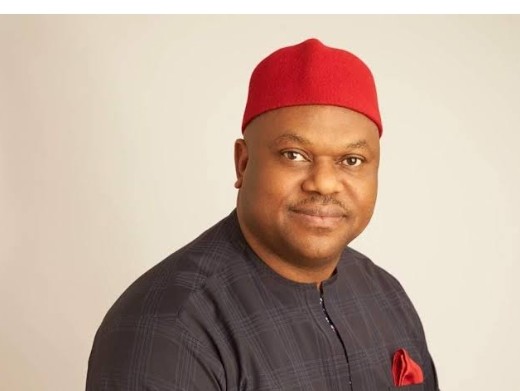
By Austin Edemodu, PhD
In Nigerian politics, public service is often measured by buildings, contracts and titles. Yet, sometimes, the most enduring legacy of leadership is found in the lives changed, careers advanced and opportunities created for ordinary people.
That perspective offers a useful way of examining Rt. Hon. Victor Ochei’s years at the Nigerian Maritime Administration and Safety Agency (NIMASA).
Ochei, an engineer by profession and former legislator, was appointed Executive Director, Maritime Labour and Cabotage Services at NIMASA in March 2020. His portfolio placed him at the intersection of maritime regulation, industry development, labour relations and human capacity building.
The significance of his tenure, therefore, goes beyond policies and administrative decisions. It can also be seen in the opportunities created for dockworkers, seafarers, indigenous maritime operators and young people from Delta State.
One of the areas that received attention was the implementation of the stevedoring framework and the promotion of indigenous participation in maritime operations.
For Nigerian dockworkers, the issue was not merely regulatory. It involved working conditions, recognition and access to opportunities in an industry where indigenous participation had historically faced significant challenges.
Ochei's chairmanship of the National Joint Industrial Council also placed him at the centre of efforts aimed at improving minimum standards and working conditions for dockworkers.
Another major challenge was the plight of Nigerian seafarers.
Some maritime cadets had completed their education but remained unable to progress professionally because they could not obtain the mandatory sea-time required for certification and advancement towards Certificates of Competency.
The response during Ochei's tenure was to pursue a more complete training pathway—one that recognised that education alone was insufficient if young people could not transition from the classroom to practical experience and professional certification.
That is where policy becomes human.
A scholarship can provide education, but a career pathway can transform a life. Training is important, but creating the opportunity for that training to lead to employment can have an even greater impact.
Available records associated with Ochei's tenure also credit him with facilitating the engagement of more than 140 Deltans as Search and Rescue Marshals, employment opportunities for seven Deltans at NIMASA, and maritime scholarships for more than 20 Deltans.
Some of the scholarship beneficiaries reportedly pursued studies in the United Kingdom, Greece, India and the Philippines, exposing young Nigerians to international maritime education and professional opportunities.
Behind those figures are individuals and families whose circumstances may have been altered by access to opportunities that might otherwise have remained out of reach.
This is why Ochei's NIMASA record should not be viewed solely as a catalogue of political or administrative achievements.
Its more compelling dimension is the question of human capacity.
His engineering background may also offer an insight into the approach attributed to him: identify a problem, understand the system and create a workable pathway towards a solution.
Whether the issue involved dockworkers seeking better conditions, cadets searching for sea-time, indigenous operators seeking greater participation or young Deltans looking for opportunities, the common denominator was access and capacity.
Perhaps that provides a broader and more useful measure of public service.
The most valuable legacy of a public official may not always be what is physically constructed or announced while in office. It may be what people are able to become because an opportunity was created for them.
That, ultimately, is the human story behind Victor Ochei's years at NIMASA.
Austin Edemodu, PhD, is an Abuja-based journalist and Public Affairs Analyst.
Share this story
Get updates on WhatsApp
Subscribe to receive selected updates from Media Gate News Online. We only use your number for this publication, and you can unsubscribe later.