
Politics
INEC Deploys Digital Strategy to Combat AI Fake News Ahead of 2027 Elections
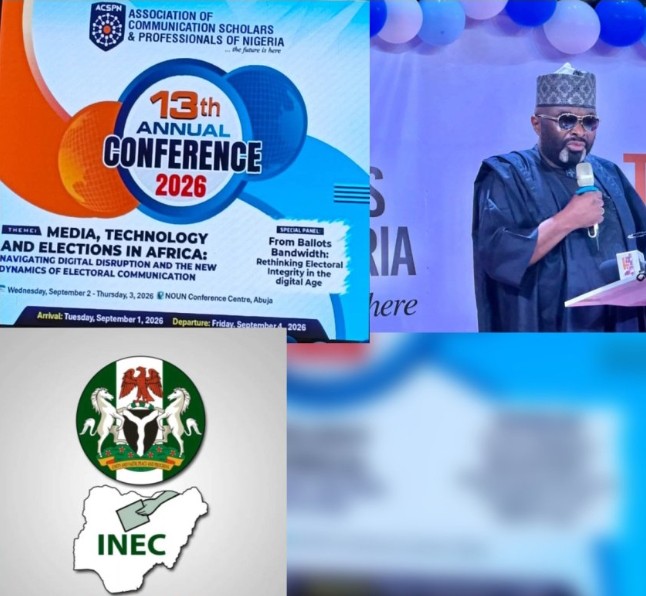
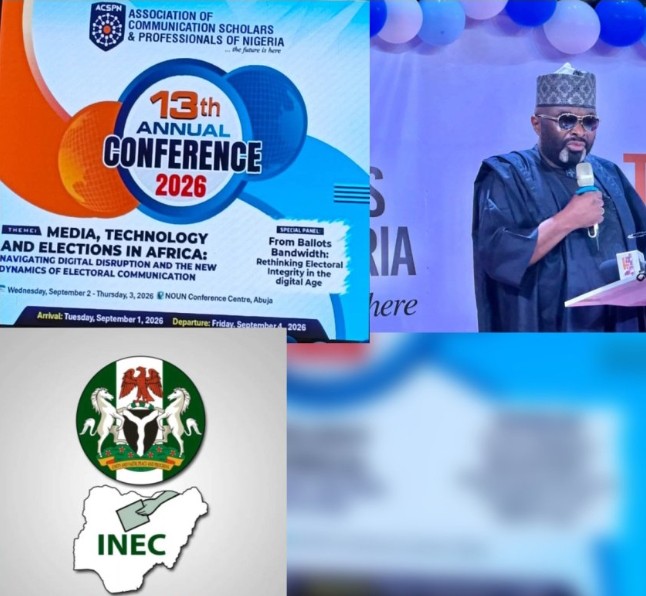
ABUJA — The Independent National Electoral Commission (INEC) has unveiled a real-time digital communication strategy to detect, verify and counter artificial intelligence-generated misinformation and disinformation ahead of Nigeria’s 2027 General Election.
The Commission said the initiative would strengthen its technological capacity and promote closer collaboration with media organisations, fact-checkers, technology companies, universities, communication scholars and civil society organisations.
National Commissioner of INEC, Prof. Sani Muhammad Adam, SAN, disclosed this while delivering a keynote address on behalf of the Commission’s Chairman, Prof. Joash Amupitan, SAN, at the 13th Annual International Conference of the Association of Communication Scholars and Professionals of Nigeria (ACSPN).
The conference brought together communication scholars, journalists, policymakers, election administrators, technology experts and other stakeholders to examine emerging challenges facing communication and democracy.
Adam said INEC had commenced comprehensive preparations for the 2027 elections, including an audit of its electoral technology infrastructure and an assessment of the resilience of its systems.
He disclosed that the Commission was conducting system redundancy assessments, penetration testing and disaster-recovery planning to minimise the risk of technological failures during the polls.
According to him, INEC is also considering a mock presidential election to subject its electoral systems to real-world stress tests before the 2027 elections.
Technology Alone Not Enough
Reflecting on the 2023 General Election, Adam noted that technologies such as the Bimodal Voter Accreditation System (BVAS) and the INEC Result Viewing Portal (IReV) played important roles in promoting electoral transparency.
However, he stressed that technology alone could not guarantee public confidence in elections.
He said credible elections also depended on reliable technological systems, timely communication and the availability of accurate information from the electoral commission.
Adam explained that INEC was therefore developing a rapid-response digital communication mechanism capable of detecting, verifying and countering false information in real time.
The mechanism, he said, would help the Commission respond quickly to fabricated photographs, videos, audio recordings, statements and other digitally manipulated content capable of misleading voters.
ACSPN Calls for Unified Response
President of ACSPN, Prof. Rotimi Williams Olatunji, called for an integrated electoral information integrity framework involving INEC, political parties, media organisations, technology platforms, civil society groups and academia.
Olatunji said the increasing sophistication of digital manipulation meant that conventional approaches to election communication were no longer sufficient.
He advocated stronger fact-checking systems, improved AI-content detection mechanisms, responsible political communication and enhanced media literacy to enable citizens to identify fabricated and manipulated content.
NOA Raises Concern
The Director-General of the National Orientation Agency (NOA), Mallam Lanre Issa-Onilu, also warned that AI-generated misinformation and manipulated digital content could seriously undermine public confidence in the 2027 elections.
Issa-Onilu urged stakeholders to promote responsible digital citizenship and intensify public enlightenment campaigns to help citizens distinguish authentic information from fabricated material.
He noted that the rapid development of artificial intelligence was making it increasingly difficult for members of the public to determine whether photographs, videos, audio recordings and statements circulating online were genuine.
INEC Chairman Honoured
A major highlight of the conference was the presentation of a Plaque of Honour to INEC Chairman, Prof. Joash Amupitan, SAN, in recognition of the Commission's contributions to democratic governance and electoral integrity in Nigeria.
The award was received on his behalf by Prof. Sani Muhammad Adam.
Participants at the conference also examined the opportunities and risks associated with the rapid transformation of electoral communication, particularly the growing influence of artificial intelligence, social media and digital manipulation on democratic processes in Nigeria and across Africa.
As the 2027 elections draw closer, stakeholders stressed that safeguarding the credibility of the polls would require more than secure electoral technology.
They maintained that a coordinated national effort would also be necessary to combat false and manipulated information capable of influencing voters, escalating political tensions and undermining confidence in election results.
Share this story
Get updates on WhatsApp
Subscribe to receive selected updates from Media Gate News Online. We only use your number for this publication, and you can unsubscribe later.