
News
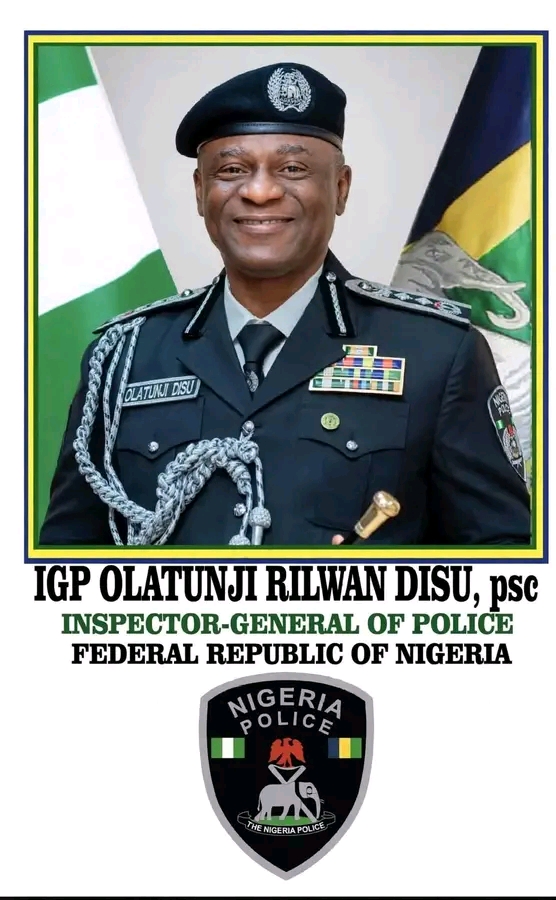
IGP Tunji Disu: Why Cry to Nigerians When You Have the President’s Ear? Aso Rock holds the solution to police welfare, not helpless citizens on the street.
-By Zik Gbemre
Recent reports circulating on social media attribute a stark remark to the Inspector-General of Police, Olatunji Rilwan Disu: "Policemen are dying daily, yet we still report for duty." While the statement highlights a grim reality regarding the occupational hazards facing the Nigeria Police Force (NPF), it raises a fundamental question about institutional responsibility: Who exactly is the Inspector-General of Police complaining to?
The Chain of Command. The office of the Inspector-General of Police is one of the most influential positions in Nigeria’s security architecture. Appointed by President Bola Ahmed Tinubu the Commander-in-Chief of the Armed Forces and confirmed through the statutory approval of the Nigerian Senate, the IGP is not an ordinary citizen who must rely on public outcry to be heard at the highest level of government.
Unlike the average Nigerian, who has no direct access to the seat of power and zero influence over federal appropriations, the IGP holds direct access to the President. If the welfare, equipment, insurance, and working conditions of police personnel are in a deplorable state, the appropriate channel for redress is the Presidential Villa, not the court of public opinion. Presenting a comprehensive report and concrete budgetary recommendations directly to President Tinubu is a core function of the IGP's leadership role.
*Economic Realities and Institutional Contradictions.*
The challenges of poor remuneration and difficult working conditions are not unique to the police; they cut across almost every public sector in Nigeria today, leaving civil servants struggling under severe economic pressures. However, the public narrative surrounding police hardship often contrasts sharply with observable realities within the force.
Despite widespread complaints about poor conditions of service, admission into the Nigeria Police Academy (POLAC) remains fiercely competitive. Notably, many senior police officers actively encourage and facilitate the enrollment of their own children into the same institution. This creates a visible disparity between public lamentations about a broken system and the eagerness of the institution's leadership to secure generational spots within it.
*Leadership Means Engaging Authority.*
Advocating for better police welfare is both necessary and just. Officers who put their lives on the line deserve adequate remuneration, modern protective gear, decent accommodation, and reliable life insurance. An under-equipped and poorly motivated force cannot be expected to deliver optimal security to the populace.
However, effective leadership requires directing grievances to those who hold the constitutional power to resolve them. The Nigerian public is already burdened by harsh economic realities and cannot be expected to bear the emotional or practical weight of fixing police administration.
IGP Tunji Disu has the ear of the President; the common man does not. Rather than venting frustrations to citizens who lack the authority to sign budgets or approve salary reviews, the Inspector-General should utilize his privileged access to engage President Tinubu directly and secure the structural reforms the Nigeria Police Force urgently needs.
Zik Gbemre
November 20,2026
We Mobilize Others To Fight For Individual Causes As If Those Were Our Causes
Share this story
Get updates on WhatsApp
Subscribe to receive selected updates from Media Gate News Online. We only use your number for this publication, and you can unsubscribe later.